Searches for the Wampanoag Treaty 1621 dollar coin value usually begin with the price. That is only part of the answer. The better question is broader. What gives this coin its collector appeal, and when does its coin value move beyond one dollar? This issue is common in ordinary form, but it has a stronger design identity and a clearer place in the Native American dollar series than many casual buyers first expect.
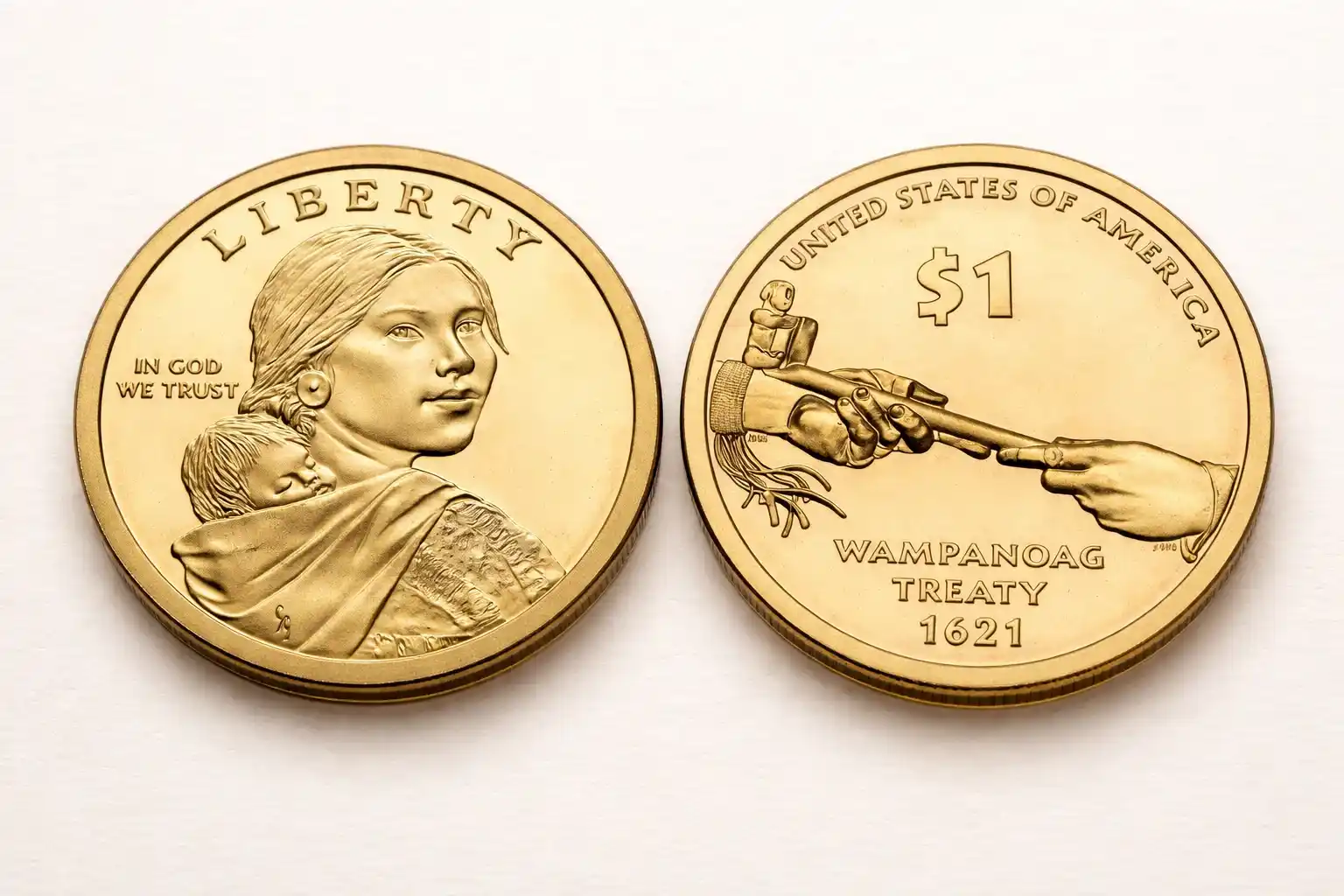
The coin is the 2011 Native American $1 issue. It is not a separate commemorative outside the series. It is a one-year reverse type within the Native American dollar program. The obverse keeps the familiar Sacagawea design. The reverse shows the hands of Supreme Sachem Ousamequin Massasoit and Governor John Carver offering a ceremonial peace pipe, with the inscription WAMPANOAG TREATY 1621. Philadelphia and Denver struck circulation-quality coins, and San Francisco struck proofs for collectors.
Why Many Buyers Treat It as a Common Dollar
That view is not wrong. In circulated or basic uncirculated form, this coin usually behaves like a normal modern dollar. NGC’s current guide still places ordinary circulated 2011-P and 2011-D examples close to face value. Many business strikes survive in nice quality, with large numbers available in mid-level Mint State.
This is why raw examples rarely feel dramatic. They are modern. They were sold in rolls and direct-ship boxes. They survive in quantity. A collector can find one without much trouble. That keeps the entry level modest.
Why The Coin Often Feels Common
Modern issue
Strong survival in raw form
Easy basic availability
Low premiums in circulated grades
Broad collector awareness
The Design Gives It More Character Than a Typical Spendable Dollar
The market reality is plain. The design story is better.
This reverse is one of the more recognizable Native American dollar designs. The hands and peace pipe create a clear visual theme. The inscription is direct. The coin also represents one specific annual reverse in a continuing series, which gives it a clean set-building role. That makes it more memorable than a random modern dollar pulled from a box.
Collectors often separate two things: price and interest. A coin can stay affordable and still deserve attention. That is where this issue sits. Its appeal comes less from rarity and more from design, one-year reverse status, and the way it fits into a complete Native American dollar run.
The Main Versions Collectors Should Separate First
The first step is to stop treating the whole issue as one coin. It is not one lane.
Version
Mint
Finish
Collector Use
Why It Matters
2011-P
Philadelphia
Business Strike
Set building, raw collecting, certified grade chasing
Standard circulation issue
2011-D
Denver
Business Strike
Set building, raw collecting, certified grade chasing
Standard circulation issue
2011-S
San Francisco
Proof
Proof Sets, modern dollar collecting
Separate surface and market profile
Position A / Position B
P And D
Edge-lettering orientation
Specialist variety collecting
Adds attribution detail
The U.S. Mint sold Philadelphia and Denver coins in 25-coin rolls and also through direct-ship boxes. PCGS recognizes Position A and Position B edge-lettering varieties for both mints. The proof is a separate collector coin and should not be mixed with ordinary business strikes when value is discussed.
P And D Coins: Affordable, But Not Meaningless
Most buyers will deal with Philadelphia and Denver pieces first. In ordinary grades, these are accessible coins. That does not make them useless to collectors.
They still matter in several ways:
Native American dollar sets
Date-and-mint runs
One-year reverse type sets
Higher-grade modern dollar collections
PCGS notes that 2011-P examples are abundant in MS67, while MS68 is very scarce. For 2011-D, coins up to about MS66 are very common, MS67 is still obtainable, and MS68 becomes scarce. This creates a split market. Raw coins remain easy. Better certified coins do not.
That split is what makes the coin more interesting than face value suggests. A basic example is common. A top-end example begins to feel different.
Proof Coins Follow a Different Market
The 2011-S proof should be read on its own terms. It was made for collectors, not circulation. That changes the whole discussion.
A proof coin is judged by different traits:
Mirror fields
Frost contrast
Surface preservation
Eye appeal
Original set context
The proof market is usually calmer and more structured than the raw circulation market. Buyers are not just asking whether the coin is present. They are looking at quality, packaging, and certified grade. That gives the proof a steadier collector role, even if it is not a rare modern proof in absolute terms.
Business Strike Vs Proof
Version
Main Surface Traits
Typical Buyer Interest
What Usually Changes Value
Business Strike
Standard mint finish
Type collectors, set builders, roll searchers
Grade, surface quality, certification
Proof
Mirror fields, sharper finish
Proof set buyers, modern dollar collectors
Preservation, frost, certification
Edge Lettering Adds a Specialist Angle
This series uses edge lettering, not just standard obverse and reverse inscriptions. On the 2011 issue, collectors may separate Position A and Position B. That is not a major concern for a casual buyer who wants one nice example. It does matter to specialists.
Edge-lettering position changes several things:
Attribution detail
Variety interest
Registry separation
More focused set building
This detail does not turn every coin into a premium piece. It does add another layer to the market. A collector who only sees a common dollar may miss that angle. A specialist will not.
When a Common Modern Dollar Starts to Feel Like a Real Collectible
This is the main question of the article. At what point does the coin stop being just a dollar and start feeling like a proper collectible?
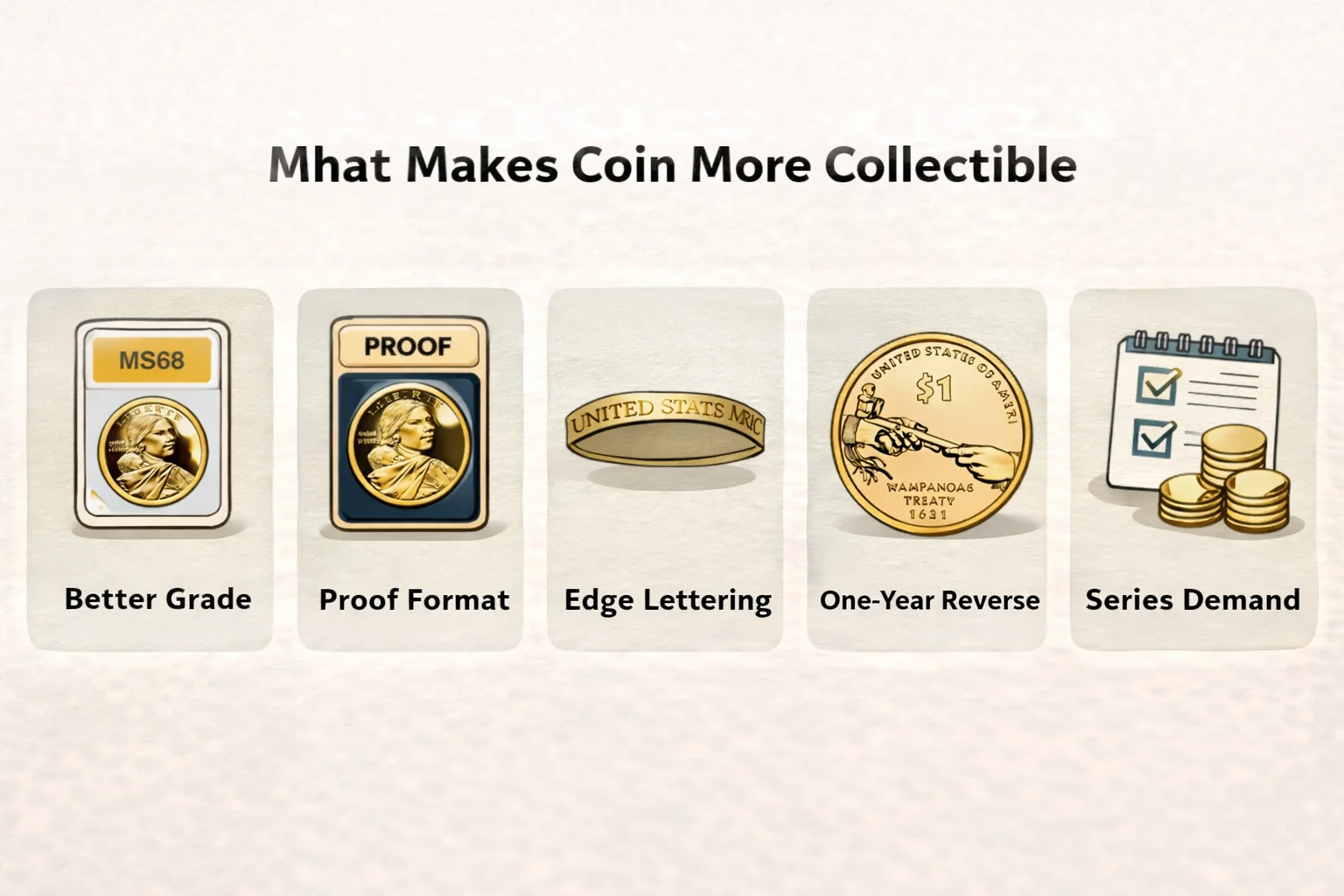
Usually, that happens when one or more of these factors appear:
Better certified grade
Cleaner surfaces
One-year reverse appeal
Proof format
Position A or Position B variety interest
Native American dollar series demand
None of these factors makes the coin a major rarity. Together, they create a real collector’s case. The coin becomes more than a spendable piece once the buyer starts separating versions, grades, and set roles.
Too many buyers skip straight to price and ignore the version. That causes confusion. A raw Philadelphia piece, a proof from San Francisco, and a certified high-grade Denver coin should not be judged the same way.
A coin identifier app can help at the first sorting stage. Coin ID Scanner fits that role well. It helps with quick value definition and collection management, so a collector can keep raw business strikes, proofs, and better pieces organized before making a closer manual judgment.
That kind of tool should stay in a support role. It helps with identification, structure, and first-pass screening. The final decision still comes from the coin itself: version, grade, edge lettering, and surface quality.
Common Issue, Better Design, Or a Worthy Collectible?
The best short answer is simple.
View
When It Fits
What It Misses
Better Conclusion
Common Issue
Raw circulated or basic uncirculated coins
Ignores design and series role
True for entry-level pieces
Better Design
Collectors notice the reverse and one-year theme
Ignores grade and market split
True for many buyers
Worthy Collectible
Proofs, higher grades, variety interest, set context
Not every example earns a premium
True in the right form
That is the real balance of the issue. It is common in one sense, stronger in design than many modern dollars, and fully collectible when seen through the right lens.
Conclusion
The Wampanoag Treaty dollar is not a rare modern issue in everyday form. It is still more than pocket change in collector terms. The reverse design is distinctive. The proof version has its own lane. Edge lettering adds a specialist layer. Better certified business strikes sit above the raw market. That is enough to make the coin worth attention, even when many examples stay inexpensive.
The practical conclusion is straightforward. Do not judge the whole issue by the cheapest raw example. Separate the version first. Then look at grade, proof status, and edge details. After that, a coin identifier app can serve as a useful support tool, but not as the final answer.